
Recyclable construction materials: 10 Powerful Benefits in 2025
The Environmental Impact of Recyclable Building Materials
Recyclable construction materials are building products that can be processed and reused after their initial use, diverting waste from landfills and reducing the need for virgin resources. These sustainable alternatives play a crucial role in reducing the environmental footprint of the construction industry.
What Are Recyclable Construction Materials?
Recyclable construction materials include:
- Metals (steel, aluminum, copper) – Nearly 98% of structural steel is recycled
- Concrete & Masonry – Can be crushed and reused as aggregate
- Wood – Reclaimed timber from demolition projects
- Glass – Crushed for new products or “glassphalt”
- Drywall – Recycled into new gypsum products (up to 96% recycled content possible)
- Plastics – Transformed into composite lumber and other products
- Asphalt – Reclaimed and reprocessed into new pavement
The construction industry generates an estimated 600 million tons of construction and demolition (C&D) debris in the United States annually – more than twice the amount of municipal solid waste. This represents not just an environmental challenge, but an opportunity to transform waste into valuable resources.
When buildings reach the end of their useful life, the materials don’t need to end up in landfills. Through proper sorting, processing, and innovative design approaches, these materials can find new life in future projects, creating a circular economy within the construction sector.
I’m Pam Hutter, Principal of Hutter Architects in Chicago, Illinois, where I’ve spent over 15 years incorporating recyclable construction materials into sustainable residential and commercial designs that reduce environmental impact while maintaining aesthetic appeal and functionality.
Recyclable construction materials terminology:
– Bio-based construction materials
– Eco-friendly insulation materials
– Sustainability in building design and construction
Recyclable Construction Materials Spotlight: Metals & Glass – Infinite Loops

I love talking about metals and glass when discussing sustainable building materials. They’re the true champions of the circular economy in construction—materials that can be recycled over and over without losing their essential qualities. This is what we call creating “infinite loops” in the material lifecycle.
Steel truly shines in the recycling world. Did you know that about 98% of structural steel avoids landfills? At our Chicago-based practice, we’ve seen how reclaimed steel beams not only reduce environmental impact but often bring wonderful character and history to new buildings.
The EPA’s research on C&D recycling confirms what we’ve observed in practice: “Steel’s recyclability is best. Each ton of recycled steel saves 1,400 pounds of coal, 120 pounds of limestone, and 2,500 pounds of iron ore.”
Aluminum and copper are equally impressive recycling performers. Both metals maintain their properties through multiple recycling cycles. The energy savings with aluminum recycling are particularly striking—using recycled aluminum requires just about 5% of the energy needed to produce new aluminum from raw materials.
Glass is theoretically infinitely recyclable too, though it faces more practical challenges in building applications. Coatings, laminations, and mixed materials can complicate the recycling process. Still, we’ve seen creative solutions emerge, like “glassphalt” (asphalt containing crushed glass) for pathways and glass aggregate for decorative concrete features.
Sorting Tips for High-Purity Metal Streams
Proper sorting is essential for maximizing the recyclability of metals. Here’s what works well for our projects:
Using magnetic separation helps distinguish ferrous metals (iron, steel) from non-ferrous metals (aluminum, copper, brass). Setting up bar-coded bins on construction sites prevents cross-contamination. And perhaps most valuable of all, establishing scrapyard partnerships with local metal recyclers provides guidance on sorting requirements and often better rates for pre-sorted materials.
Last year, we renovated a 1920s Chicago warehouse into residential lofts. By working closely with a local scrapyard to create a specialized sorting system, we achieved over 95% metal recycling rates and significantly reduced disposal costs. It’s a win-win approach we bring to all our projects.
Designing Glazing for Future Recyclability
When we specify glass for our designs, we think ahead to its end-of-life recyclability:
Whenever safety codes allow, we minimize laminations by choosing single-pane or easily separable multi-pane systems. We design for frame modularity, creating window systems that can be easily disassembled so the glass can be removed cleanly. And we carefully consider coating choices, researching options that maintain energy efficiency while remaining recyclable.
I’ve found that having early conversations about recyclability with glass manufacturers often reveals more sustainable options that don’t compromise on performance or beauty. These discussions have become a standard part of our green construction strategies at Hutter Architects.
The beauty of working with recyclable construction materials like metals and glass is that they represent true sustainability—materials that can move from building to building, generation after generation, with minimal loss of quality or performance. This circular approach not only conserves resources but often creates more interesting, characterful spaces that tell stories through their materials.
Concrete, Masonry & Gypsum – Downcycling to Upcycling
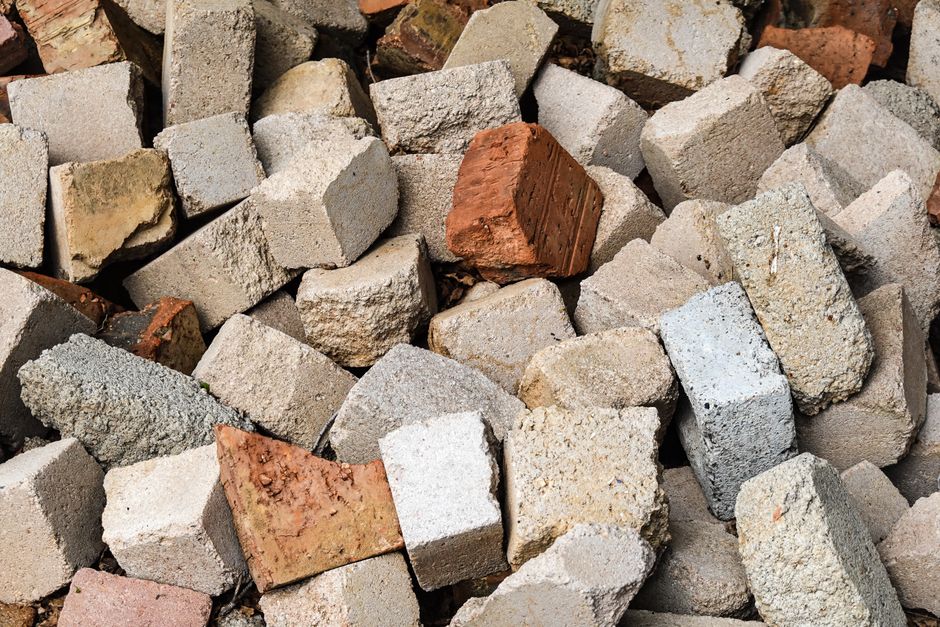
When I look at a pile of concrete rubble on a demolition site, I don’t see waste—I see possibility. Concrete, the world’s most widely used building material, has historically been a climate culprit, accounting for roughly 7% of global CO2 emissions. But here’s the good news: we’re witnessing a remarkable change from simple recycling to true innovation.
Gone are the days when crushed concrete could only be “downcycled” as roadbed fill. Today’s Recycled Concrete Aggregate (RCA) is finding its way into new structural applications, while cutting-edge technologies are actually “upcycling” this material into products with higher value than the original.
“On our Chicago renovation projects, we’re increasingly specifying concrete with recycled content,” I tell clients. “It’s not just environmentally responsible—it often saves money and performs beautifully.”
How Recyclable Construction Materials Reduce Carbon in Concrete
The carbon math for concrete is changing dramatically thanks to three key approaches:
Supplementary Cementitious Materials (SCMs) are revolutionizing concrete mixes. By incorporating industrial byproducts like fly ash from coal plants and slag from steel production, we’re not only diverting waste from landfills but substantially cutting carbon emissions. A concrete mix with 70% slag, for instance, produces about 70% less CO2 than traditional Portland cement.
Carbon-absorbing formulations represent the next frontier. Products like Ferrock—made from recycled steel dust and silica—actually absorb and bind CO2 during curing, making them carbon-negative. Some of these innovative materials can be up to five times stronger than conventional concrete.
Precast concrete elements manufactured in controlled factory settings allow for precise incorporation of recycled content while reducing waste. At Hutter Architects, we’re increasingly designing with these components in mind, ensuring they can be disassembled and reused in future buildings.
| Material | CO2 Emissions (kg/ton) | Recycled Content Potential | Lifespan |
|---|---|---|---|
| Virgin Portland Cement | 800-900 | 0% | 50+ years |
| 30% Fly Ash Blend | 560-630 | 30% | 50+ years |
| 70% Slag Blend | 240-270 | 70% | 50+ years |
| Ferrock | Carbon negative | 95% | Under study |
I’m particularly excited about the K-Briq, developed by researchers at Heriot-Watt University in Scotland. Made from 90% construction waste including brick, stone, and plasterboard, K-Briq produces just one-tenth the CO2 emissions of a traditional fired brick while matching its performance. This is exactly the kind of innovation that transforms the concept of waste.
For a deeper dive into how deconstruction practices support these recycling efforts, I often recommend this informative video on deconstruction benefits.
Gypsum Loop: Closing the Sheetrock Cycle
The humble drywall panel—a staple in nearly every modern building—has become an unexpected recycling success story. Today’s manufacturers offer drywall containing up to 96% recycled gypsum content from various waste sources, creating a nearly closed-loop system.
The secret to effective drywall recycling begins with intact panel removal during demolition. When we carefully remove whole sheets rather than smashing walls, the paper and gypsum separate more easily during processing. This simple step dramatically improves recycling quality.
Regional landfill bans have become powerful drivers of innovation. In areas like Boston and throughout the Pacific Northwest, restrictions on landfilling gypsum have created robust recycling programs and market demand for reclaimed material.
Perhaps most surprisingly, agricultural applications offer another path for recycled gypsum. When properly processed, gypsum from drywall makes an excellent soil amendment, providing essential calcium and sulfur to crops—a perfect example of how construction waste can benefit entirely different industries.
“The change in drywall handling has been remarkable,” I often tell clients during material selection. “A decade ago, virtually all demolition drywall went to landfills. Now we’re specifying products with high recycled content and ensuring our contractors properly salvage existing material for recycling.”
By approaching concrete, masonry, and gypsum with creativity and care, we’re turning traditional waste streams into valuable resources. At Hutter Architects, this kind of practical sustainability isn’t just good for the environment—it’s good design.
Wood, Plastics & Composites – Closing Consumer Waste Streams

There’s something magical about the warmth and character of reclaimed wood. When we incorporate salvaged timber from old barns, factories, or demolished buildings into our Chicago designs, we’re not just reducing demand for new lumber – we’re telling a story. Each knot, nail hole, and weathered edge speaks to a building’s past life while creating a sustainable future.
Reclaimed timber isn’t just beautiful; it’s environmentally responsible. When virgin wood is necessary, we insist on Forest Stewardship Council (FSC) certification, ensuring the lumber comes from forests where trees are replanted and ecosystems protected. While not technically recycled, FSC certification represents a crucial link in sustainable wood sourcing when salvaged options aren’t viable.
The plastic waste crisis has unexpectedly created remarkable opportunities in construction. What was once destined for landfills or oceans is now being transformed into valuable building materials. Recycled plastic lumber offers exceptional durability for decking, fencing, and outdoor furniture without the maintenance headaches of natural wood. We’ve specified plastic-composite roof tiles that beautifully mimic slate or cedar shakes while diverting waste from landfills. Even insulation is getting a green makeover, with products made from recycled plastic bottles providing excellent thermal performance.
I’m particularly excited about innovations like Arqlite gravel, a lightweight aggregate made from those frustrating unrecyclable plastic films that typically end up in landfills. This material’s lighter weight reduces structural demands and transportation emissions – a win-win for sustainability.
Wood-Plastic Composites (WPC) represent another breakthrough, combining recycled wood fibers with reclaimed plastics to create exceptionally durable products for outdoor applications. These materials stand up to Chicago’s challenging weather far better than natural wood, resisting rot, insects, and weathering while giving new life to both wood and plastic waste.
Sourcing Certified & Salvaged Wood Locally
Finding quality reclaimed wood requires knowing where to look. At Hutter Architects, we’ve built relationships with Habitat ReStore locations throughout Chicago, where donated building materials find new homes at a fraction of retail prices. These partnerships support Habitat for Humanity’s housing mission while keeping valuable materials in circulation.
Working with salvaged wood does require special attention. We collaborate with specialists who inspect for pests and structural integrity, ensuring reclaimed lumber is properly graded and certified for its intended use. Modern de-nailing technology has been a game-changer, efficiently removing metal fasteners from old wood and making it safer to process for new applications.
“Last year, we transformed a Lincoln Park renovation by sourcing floor joists from a 19th-century warehouse demolition,” I often tell clients. “The old-growth Douglas fir became stunning flooring and stair treads with a depth of color and tight grain pattern that simply doesn’t exist in newly harvested lumber.”
Turning Single-Use Plastics into Structural Products
The change of plastic waste into building materials represents one of the most promising developments in sustainable construction. Companies like ByFusion are compressing mixed plastic waste into building blocks suitable for non-structural walls, landscape features, and furniture. These blocks require no sorting or cleaning of plastics, accepting materials that would otherwise be unrecyclable.
Roads are getting a plastic makeover too. Recycled plastic pavers are proving more durable than traditional materials while reducing petroleum use. One mile of plastic-improved road can repurpose up to 10 tons of plastic – equivalent to nearly 3 million plastic bags.
Circular-economy startups are creating entire ecosystems around plastic waste collection, processing, and change. These innovative companies aren’t just developing new materials; they’re creating local jobs and addressing environmental challenges simultaneously.
The durability of these recycled plastic products is remarkable. Recycled plastic lumber can last up to five times longer than treated wood for applications like decking, with zero need for staining, sealing, or chemical treatments. In Chicago’s freeze-thaw cycles, this longevity translates to significant long-term savings for homeowners while keeping plastics out of landfills.
For more information about incorporating recyclable construction materials into your project, check out our guide to Natural Building Materials.
Bio-Based & Next-Gen Recyclables – From Mycelium to Paper Studs

The most exciting frontier in recyclable construction materials isn’t just about recycling—it’s about reimagining what building materials can be. Nature has spent billions of years perfecting sustainable design, and we’re finally catching up.
Take bamboo, for instance. This remarkable grass (not a wood!) grows up to 1.5 inches daily and reaches harvest maturity in just 3-5 years, compared to decades for traditional timber. At Hutter Architects, we’ve incorporated bamboo flooring and cabinetry into several Chicago homes, impressing clients with both its durability and distinctive grain patterns.
Perhaps nothing represents this bio-revolution better than mycelium-based materials. I recently visited a facility where they’re literally growing building insulation using mushroom roots. The process is fascinating—mycelium feeds on agricultural waste like corn stalks, gradually changing it into solid material that can be molded into any shape. The finished products are lightweight, fire-resistant, and when they’ve served their purpose? Completely compostable.
“Mycelium may be the most exciting building material on the horizon,” notes a recent green construction report. “It’s grown in molds using minimal energy, creates no waste, and can be engineered for specific performance characteristics.”
Hempcrete has become another favorite in our sustainability toolkit. This mixture of hemp plant core and lime creates walls that breathe naturally, regulating humidity while sequestering carbon. While not load-bearing, it provides excellent insulation with none of the off-gassing concerns of conventional foam products.
The innovation doesn’t stop there. Wood Tube studs made from recycled paper can replace metal in non-load-bearing walls, slashing embodied carbon by up to 90%. FabBRICK transforms discarded textile waste into construction blocks with both structural and insulating properties. Kenoteq’s K-Briq incorporates 90% construction waste while producing just a tenth of traditional brick’s carbon emissions. And precast cork panels provide thermal and acoustic insulation using bark harvested without harming trees.
Designing with Recyclable Construction Materials for Net-Zero Homes
When we design net-zero homes at Hutter Architects, these innovative materials aren’t just sustainable checkboxes—they’re performance powerhouses.
Many bio-based materials offer exceptional thermal mass, storing heat energy to reduce temperature swings and lower energy demands. I’ve found this particularly valuable in Chicago’s climate extremes, where a well-designed passive solar home with appropriate thermal mass can dramatically reduce heating and cooling loads.
The natural moisture buffering capabilities of materials like hempcrete and mycelium create healthier indoor environments by absorbing excess humidity when it’s damp and releasing it when the air dries out. This reduces condensation issues and can even decrease the size of mechanical systems needed.
These choices also help with certifications. Specifying recyclable construction materials with recycled content can earn up to 2 points toward LEED certification when they constitute 10-20% of project materials.
“In a recent net-zero project in Chicago’s North Shore,” I tell clients, “we combined structural reclaimed timber with mycelium insulation panels and hempcrete infill. The result wasn’t just beautiful and high-performing—it actually sequestered more carbon than it produced during construction.”
Overcoming Barriers to Adoption
Despite their impressive benefits, these innovative recyclable construction materials face real-world challenges. Being transparent about these problems helps clients make informed decisions.
Building codes remain one of the biggest obstacles. Many innovative materials lack established testing protocols, making approval processes lengthy. We steer this by working closely with Chicago building officials early in the design process, sometimes providing additional testing data or engineering verification.
Supply chain limitations mean availability varies dramatically by region. We’ve developed relationships with suppliers throughout the Midwest to ensure reliable access to materials like hempcrete and mycelium products.
The perception of higher costs can deter some clients initially. While upfront expenses may be higher for certain bio-based materials, we help clients understand the complete lifecycle value—including energy savings, maintenance reductions, and potential health benefits.
Perhaps most importantly, education remains crucial. Both industry professionals and homeowners may be unfamiliar with these materials. We regularly host workshops at our Chicago studio where people can touch, feel, and learn about these innovations firsthand.
“The biggest barrier is often simply unfamiliarity,” I explain to hesitant clients. “But once you see these materials performing in real buildings and understand their benefits, that uncertainty quickly transforms into excitement about being part of the solution.”
Want to learn more about sustainable building options? Explore our detailed guides on natural building materials, bio-based construction materials, and sustainable building design.
Conclusion

As we’ve explored throughout this journey, the change of construction waste into valuable building materials isn’t just a possibility—it’s happening right now, evolving from specialty applications into standard practice. At Hutter Architects, we’re passionate about accelerating this shift through thoughtful design choices that prioritize sustainability without compromising quality.
The benefits of embracing recyclable construction materials reach far beyond just being kind to the environment (though that’s certainly important!). When we divert materials from landfills, we’re making a significant dent in those 600 million tons of construction and demolition waste generated annually across the United States. That’s not just good stewardship—it’s smart business.
“I’ve watched clients’ eyes light up when they realize recycled materials can actually save them money,” says Pam Hutter. “As landfill fees climb and recycled product manufacturing scales up, the cost equation increasingly favors sustainable choices.”
The carbon story is equally compelling. Buildings carry a carbon “backpack”—what we call embodied carbon—from the day construction begins. By choosing materials with previous lives, we dramatically lighten this carbon load, sometimes achieving carbon-negative results when combining strategies like reclaimed timber with bio-based insulations.
There’s also something deeply satisfying about the community connections that form around material reuse. When we source salvaged flooring from a historic Chicago warehouse or partner with Habitat ReStore for fixtures, we’re not just reducing waste—we’re preserving local history, creating jobs, and making sustainable building more accessible to everyone.
Perhaps most surprising to new clients is how these materials bring unique character to their spaces. That slight patina on reclaimed copper fixtures, the rich grain patterns in old-growth salvaged timber, the subtle color variations in recycled glass countertops—these elements tell stories that brand-new materials simply cannot match.
As architects, we occupy a pivotal position in the building industry. Our specifications and designs directly influence material choices, construction methods, and end-of-life scenarios for the structures we create. By designing with disassembly and material recovery in mind, we’re not just creating today’s buildings—we’re curating tomorrow’s material banks.
“Every blueprint is a chance to rethink our relationship with materials,” reflects Pam Hutter. “At our firm, we don’t see sustainable choices as limitations—they’re invitations to innovate, to problem-solve creatively, and ultimately to design spaces that are both beautiful and responsible.”
The circular economy in construction isn’t some distant future ideal—it’s being built today, one recycled beam, one reclaimed brick, one bio-based panel at a time. We’re proud to be part of this change, creating homes that honor both human needs and planetary boundaries.
Ready to explore how recyclable construction materials could improve your next project? Visit our guide to Sustainable Building Design or reach out to our Chicago office to start a conversation about building better, together.


