
Understanding Architect Specializations
Types of architect span a diverse range of specializations, each bringing unique expertise to different building challenges. Whether you’re planning a sustainable home, restoring a historic building, or designing outdoor spaces, understanding these specializations helps you find the right professional for your project.
The main types of architect include:
- Residential Architect – Custom homes, renovations, and multi-family housing
- Commercial Architect – Office buildings, shopping centers, and large-scale public projects
- Sustainable/Green Design Architect – Energy-efficient, net-zero, and environmentally conscious design
- Landscape Architect – Parks, plazas, and outdoor environments
- Interior Architect – Structural layout and space optimization
- Industrial Architect – Factories, warehouses, and production facilities
- Urban Designer – City planning, zoning, and infrastructure
- Restoration Architect – Historic preservation and conservation
Each specialization requires distinct skills, education, and experience. While all architects share core competencies in design and project management, their focus areas shape how they approach problems and serve clients.
The global architectural services market was valued at $330.5 billion in 2023, reflecting the profession’s breadth and importance. Yet many people still view architects as a single profession rather than recognizing the specialized expertise required for different project types.
Why specialization matters: Just as you wouldn’t hire a heart surgeon to perform brain surgery, you need the right architect for your specific project. A residential architect understands local building codes and personal lifestyle needs, while a commercial architect steers zoning laws and designs for high foot traffic.
As Pam Hutter, Principal of Hutter Architects in Chicago, Illinois, I’ve spent my career working across multiple types of architect specializations, with a particular focus on sustainable residential design. My experience has shown me how choosing the right architectural specialist can transform a project from good to exceptional—and that starts with understanding what each type brings to the table.
A Deep Dive into the Main Types of Architect
The field of architecture is incredibly diverse, with professionals dedicating their expertise to specific niches. This specialization ensures that every project, no matter its scale or purpose, benefits from focused knowledge and experience. Let’s explore some of the most prominent types of architect that shape our built environment.
Residential Architect
Residential architects are the dream weavers for our homes. They specialize in designing places where people live, from single-family custom homes and renovations to multi-family projects like duplexes, townhouses, and apartment buildings. For many, a house isn’t just four walls; it’s a sanctuary, the biggest investment, and the backdrop to their lives.
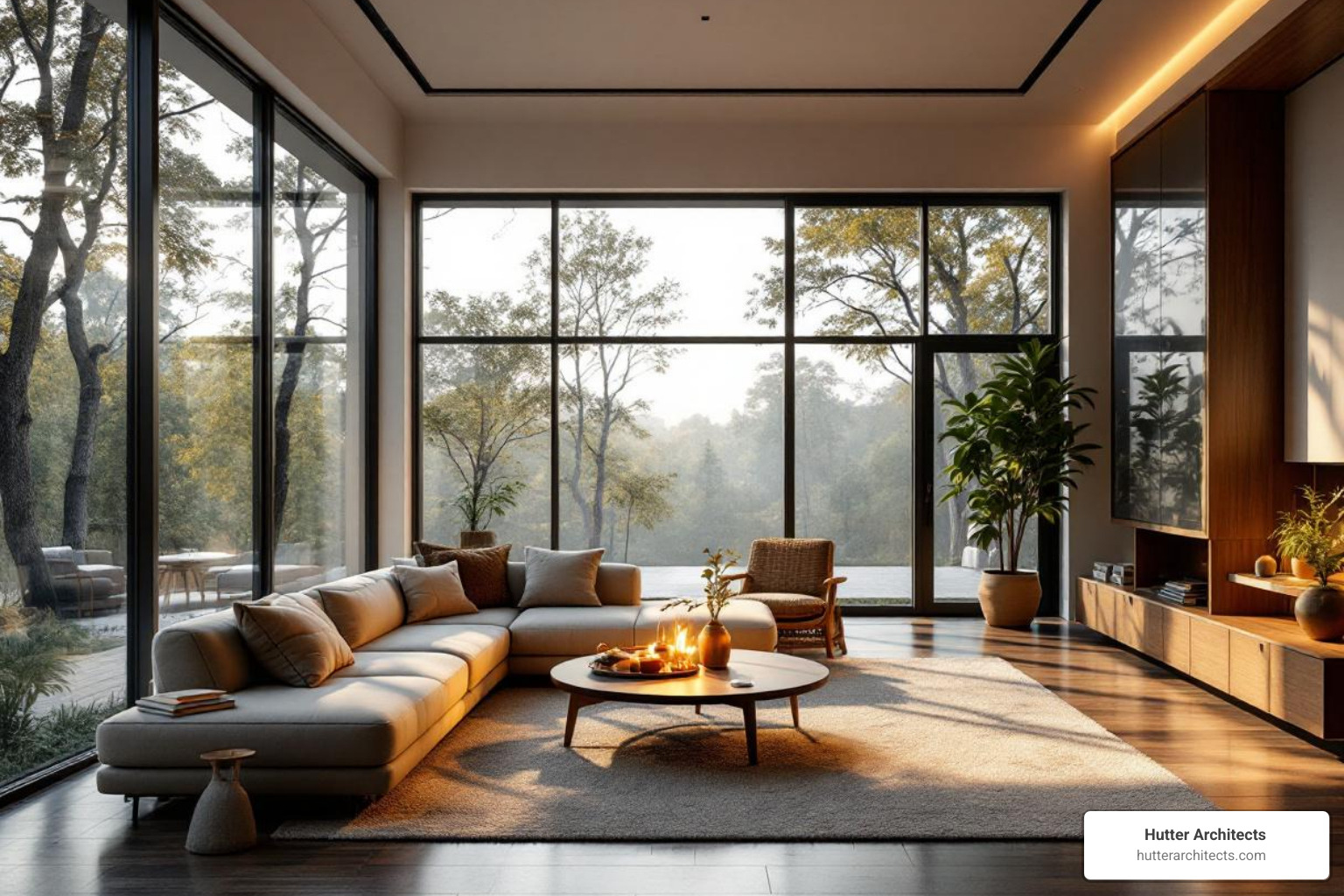
Our work as residential architects involves deep client collaboration, where we strive to understand personal needs, lifestyles, and aspirations. We help clients steer the complexities of budget management and ensure designs adhere to local building codes and neighborhood restrictions in places like Chicago, IL. The goal is to create spaces optimized for comfort, performance, and aesthetic appeal, considering factors like natural light, site conditions, and efficient space utilization. For example, at Hutter Architects, we focus on creating energy-efficient, future-proofed homes that prioritize environmental sustainability, ensuring our designs are not only beautiful but also responsible.
Commercial Architect
Commercial architects are the masterminds behind the impressive structures that define our cityscapes. This type of architect designs buildings and spaces for business purposes, including skyscrapers, office buildings, shopping centers, and various public buildings like museums or educational institutions.

These large-scale projects come with unique challenges. Commercial architects must skillfully balance aesthetic design with practicality, safety, and strict regulatory compliance, including complex zoning laws. They design for high foot traffic, ensuring functionality and efficiency for a diverse range of users. The public visibility of commercial properties means these architects often face significant pressure, as their work directly impacts public perception and urban identity. Their expertise is crucial in creating functional and engaging environments that serve business needs while enhancing the overall experience for employees and customers alike.
Sustainable / Green Design Architect
As environmental consciousness grows, the sustainable or green design architect has become an indispensable specialist. This type of architect focuses on reducing the environmental impact of a building throughout its entire lifecycle, from construction methods and material sourcing to energy systems and long-term operation.
Our approach often involves achieving certifications like LEED (Leadership in Energy and Environmental Design) or designing to Passive House standards, which significantly reduce a building’s energy consumption. We prioritize natural, non-toxic materials, advanced ventilation systems, ample natural lighting, and thermal comfort. The philosophy behind wellness architecture, a close cousin, is deeply rooted in the belief that our surroundings profoundly impact our health, mood, and overall quality of life.
This specialization requires a total understanding of how to reduce environmental impact, often involving more hands-on engagement during the construction process to ensure integrated systems function as intended. We integrate renewable energy systems, such as solar panels, and consider the building’s orientation to maximize passive heating and cooling. This commitment to sustainability is at the core of Hutter Architects’ mission, where we strive to create homes that are not only beautiful but also environmentally responsible and future-proofed for our clients.
For more on the origins of architectural thought, exploring how design has always been rooted in practical and aesthetic considerations, consider the insights on Etymology in Architecture: Tracing the Language of Design to its Roots.
Landscape Architect
While building architects shape structures, landscape architects sculpt the outdoor world around them. This distinct profession focuses on designing, planning, and managing outdoor spaces and environments, blending nature and design to create functional, aesthetically pleasing, and sustainable settings.

Their work extends to public parks, urban plazas, greenways, and even environmental restoration projects. A landscape architect needs a deep understanding of horticulture, knowing which plants are suitable for specific climates and require particular maintenance. They consider site performance, topography, drainage, and water management to create resilient and beautiful outdoor environments. This balance between human needs and environmental sustainability is paramount, ensuring that these spaces improve quality of life while supporting local ecosystems.
Interior Architect
Often confused with interior decorators, interior architects play a fundamentally different and more structural role. This type of architect focuses on the structural layout of interior spaces, ensuring they are functional, safe, and efficient. They merge the art of designing indoor environments with architectural science, creating spaces that are not only aesthetically pleasing but also optimized for their intended use.
Interior architects consider how a space will be used, selecting materials, finishes, and lighting to meet physical, psychological, and emotional needs. They integrate building systems and ensure accessibility and ergonomics. Unlike interior decorators, who primarily focus on furnishings and decorative elements, interior architects are often licensed professionals with a technical understanding of construction and planning designs, ensuring spaces are used to their full potential.
Other Key Specializations
Beyond these primary categories, architecture offers even more specialized paths, each contributing uniquely to our built environment.
Industrial Architect: This type of architect specializes in designing facilities for manufacturing, production, and distribution, such as factories, warehouses, and logistics centers. Their primary focus is on optimizing workflow efficiency, ensuring worker safety, and accommodating heavy machinery. They must have a deep understanding of the specific use case of each building zone and integrate equipment efficiently, making these spaces highly functional and productive.
Urban Designer: Operating at a city planning level, urban designers are concerned with the arrangement, appearance, and functionality of towns and cities. They plan entire neighborhoods and communities, integrating infrastructure, zoning laws, public transportation, and green spaces for sustainable growth and development. Their work involves creating cohesive urban areas that encourage community interaction, facilitate movement, and improve overall living conditions.
Restoration Architect: These architects are the guardians of history, specializing in the restoration and protection of historic buildings. Their work requires an in-depth understanding of period architecture, traditional construction methods, and the restrictions placed on listed buildings. They carefully maintain historic authenticity, often collaborating with historians and conservators to preserve cultural heritage while ensuring structural integrity and protection from the elements.
Beyond Buildings: Architects in the Technology Sector
When we talk about types of architect, it’s important to acknowledge that the term isn’t exclusive to physical buildings. In the modern technology landscape, the concept of “architect” has evolved to describe highly specialized roles that design and oversee complex digital systems. This often leads to confusion, so let’s clarify two prominent roles in the tech industry: the Enterprise Architect and the Solution Architect.
Enterprise Architect vs. Solution Architect
The fundamental difference between an Enterprise Architect (EA) and a Solution Architect (SA) can be understood through a simple analogy:
- An Enterprise Architect is like a City Planner. They focus on the overall structure, strategy, and long-term health of an entire organization’s technology landscape. They answer the “WHAT” needs to be done and “WHY” from a strategic business perspective.
- A Solution Architect is like a Building Architect. They design specific technology solutions to solve particular business problems within the established enterprise framework. They focus on the “HOW” of implementation for a given project.
While distinct, these roles are highly collaborative and hierarchical. The Enterprise Architect provides the overarching vision and strategic guardrails, while the Solution Architect translates that vision into actionable, project-specific designs. This ensures that individual solutions align with the broader business goals and technological direction of the organization.
Here’s a quick comparison:
| Feature | Enterprise Architect | Solution Architect |
|---|---|---|
| Scope | Entire organization, across all business units | Specific project or solution |
| Time Horizon | Long-term (3-10 years) | Mid-term (months to 1-2 years) |
| Focus | Strategic, holistic, business goals alignment | Tactical, project-specific, technical implementation |
| Stakeholders | C-suite, business unit heads, IT leadership | Project managers, development teams, business analysts |
| Key Deliverables | IT Strategy & Roadmaps, Governance Frameworks, Enterprise Architecture Blueprints | High-Level Solution Design, System Integration Diagrams, POCs |
Responsibilities and Focus
Let’s dig a bit deeper into the responsibilities and focus areas for each of these tech-centric types of architect:
Enterprise Architect (EA):
The EA maintains a holistic view of the organization’s entire technology landscape. Their primary responsibilities include:
- IT Strategy & Roadmaps: Defining the long-term technological direction that supports business growth and innovation.
- Technology Principles & Standards: Establishing guidelines for technology selection, usage, and integration across the enterprise.
- Capability Maps: Understanding and mapping the organization’s business capabilities to its technology assets.
- Governance Frameworks: Ensuring compliance with architectural standards, security policies, and regulatory requirements.
- Enterprise Architecture Blueprints: Creating overarching designs that show how different systems and data interact across the organization.
EAs are constantly asking, “Does this technology align with our 5-year business plan?” or “How can we optimize our entire IT infrastructure to reduce redundancy and cost?”
Solution Architect (SA):
The SA takes the high-level guidance from the EA and translates it into concrete, implementable technical solutions for specific projects. Their responsibilities include:
- High-Level Solution Design Documents: Detailing the architecture, components, and interfaces of a specific solution.
- Technology Selection for a Project: Choosing appropriate technologies from approved lists, ensuring they fit within enterprise standards.
- Proof-of-Concept (POC) Definitions: Designing and overseeing the creation of prototypes to validate technical approaches.
- Non-functional Requirements (NFRs) Design: Ensuring the solution meets performance, scalability, security, and reliability criteria.
- System Integration Diagrams: Illustrating how the new solution will connect with existing systems.
SAs are focused on questions like, “How can we build this new customer mobile app to be scalable and secure within budget and timeline constraints?” or “Which specific tools and platforms will best achieve the project’s objectives while adhering to enterprise standards?”
The collaboration between these types of architect is vital. EAs provide the strategic framework, allowing SAs to innovate within defined boundaries. SAs, in turn, provide valuable feedback to EAs on the practicality of standards and the emergence of new technologies, creating a dynamic feedback loop that benefits the entire organization.
The Path to Becoming a Licensed Architect
Becoming a licensed architect in the United States is a rigorous journey that typically involves three core components: education, experience, and examination. This multi-step process ensures that licensed professionals possess the comprehensive knowledge and skills necessary to design safe, functional, and inspiring buildings.
1. Education:
The first step is earning a professional degree in architecture from a program accredited by the National Architectural Accrediting Board (NAAB). The NAAB accredits three primary degree types:
- Bachelor of Architecture (B.Arch.): Typically a five-year program.
- Master of Architecture (M.Arch.): Usually a two-to-three-year program, often pursued after a pre-professional undergraduate degree in architecture or a related field.
- Doctor of Architecture (D.Arch.): A less common, typically three-to-four-year program.
Most U.S. jurisdictions require a professional degree from a NAAB-accredited program for licensure.
2. Experience:
After completing their education, aspiring architects must gain practical experience through the Architectural Experience Program (AXP). Administered by the National Council of Architectural Registration Boards (NCARB), the AXP provides a structured framework for documenting and gaining experience across various architectural practice areas, typically requiring several years of supervised work under a licensed architect. This hands-on experience is crucial for developing practical skills and understanding the day-to-day realities of the profession.
3. Examination:
The final hurdle is passing the Architect Registration Examination (ARE). This multi-part national exam, currently in its ARE 5.0 version, covers a wide range of topics essential to architectural practice, including practice management, project management, programming & analysis, project planning & design, project development & documentation, and construction & evaluation.
Upon successfully completing these three requirements, individuals can then apply for licensure with their state’s architectural licensing board. For those of us practicing in Chicago, IL, this means adhering to the specific regulations set forth by the State of Illinois.
Lifelong learning and continuing education (often referred to as CPD, or Continuing Professional Development) are also critical for maintaining licensure and staying current with evolving building codes, technologies, and sustainable design practices.
For comprehensive information on U.S. architect licensing, including detailed requirements and resources, we recommend visiting the official source: Information on U.S. Architect Licensing.
Frequently Asked Questions About Architect Specializations
We often encounter common questions about the diverse types of architect and their roles. Here, we address some of the most frequent inquiries to help you better understand the profession.
How do I choose between different types of architect for my project?
Choosing the right architect is one of the most significant decisions you’ll make for your project. The “best” type of architect is entirely project-dependent, custom to your specific needs and goals.
First, assess your project needs. Are you building a new home or renovating an existing one? Then a residential architect, like us at Hutter Architects, would be your ideal partner. Are you developing a large commercial complex? A commercial architect is essential. For outdoor spaces, a landscape architect is key.
Consider the importance of specialization. While some firms offer a broad range of services, engaging a specialist often leads to higher quality outcomes. A residential architect will be intimately familiar with local building codes, sustainable home design principles, and the nuances of creating personal living spaces. A commercial architect will understand zoning laws, public safety regulations, and the demands of high-traffic environments.
When making your choice, we always advise:
- Reviewing portfolios: Look for architects whose past work aligns with your aesthetic and functional vision.
- Checking experience: Ensure they have proven experience with projects similar to yours.
- Building rapport: Choose an architect with whom you feel comfortable and can communicate openly. An effective working relationship is crucial for a successful project.
What is the highest-paid type of architect?
It’s a common question, and the answer isn’t straightforward because an architect’s salary is influenced by numerous factors, rather than a single “highest-paid” specialization.
Key salary factors include:
- Experience Level: Senior architects, partners, and principals typically earn significantly more than entry-level professionals.
- Firm Size and Prestige: Larger, more renowned firms, especially those in major metropolitan areas like Chicago, IL, often offer higher compensation.
- Geographic Location: Architects in high cost-of-living areas, particularly those with a strong demand for architectural services, tend to earn more.
- Specialization Demand: Certain niches, such as healthcare architecture (designing hospitals and clinics), luxury residential design, or those integrating advanced technology (like BIM Managers), can command higher salaries due to specialized expertise. Sustainable and net-zero design, our specialty at Hutter Architects, is also a growing and increasingly valued area.
- Role: Lead Architects, Project Managers, and those with strong business development skills often see higher pay.
While the median salary for recent architecture graduates was $54,500 in 2021, experienced architects in high-demand sectors or those running successful firms can certainly achieve six-figure incomes. For instance, fixed fees for commercial and institutional projects typically range between 4-12% of construction costs, while residential projects might see fees from 12-20%, with renovations sometimes reaching 15-20% due to complexity. Therefore, it’s less about one specific “type” and more about the combination of specialization, experience, location, and the value an architect brings to their clients.
What’s the difference between an architect and a building designer?
This is a critical distinction that impacts legal responsibility, scope of work, and public safety. In most developed countries, including the United States, there’s a significant legal difference between a licensed architect and a building designer.
- Licensure: An architect is a licensed professional who has met rigorous educational, experience, and examination requirements (as discussed in “The Path to Becoming a Licensed Architect” section). This licensure grants them the legal authority to practice architecture, sign off on construction documents, and take legal responsibility for their designs. A building designer, or architectural designer, typically does not hold this license.
- Education and Training: Architects typically hold a professional degree from an accredited architecture program. While building designers may have design education or extensive experience, they often lack the comprehensive, accredited training that underpins an architect’s qualifications.
- Legal Responsibilities: Architects are legally responsible for the safety, accessibility, and structural integrity of their designs. Their decisions directly affect public safety. Building designers, while skilled, generally cannot assume this level of legal responsibility for the overall building design.
- Scope of Work: Architects are qualified to design and oversee the construction of nearly all building types, particularly those larger than a single-family home or barn, which often require an architect’s seal by law. Building designers may be restricted to smaller, less complex projects, or specific components of a building, depending on local regulations.
As stated by sources like BUILD.com.au, the distinction often comes down to who can legally oversee and take responsibility for the entire design and construction process. For any project impacting public safety or requiring complex structural solutions, a licensed architect is not just recommended, but often legally required.
Conclusion: Finding the Right Architect for Your Vision
As we’ve explored, architecture is rich with diverse types of architect, each bringing specialized skills to the table. From the intimate scale of residential design to the vast scope of urban planning, and even the intricate systems of enterprise technology, architects are problem-solvers and visionaries.
Matching the right architect to your project goals is paramount for success. Whether you’re dreaming of a cozy home, a busy commercial center, or a sustainable community, understanding these specializations empowers you to make an informed decision. For us at Hutter Architects, our passion lies in sustainable residential design, where we apply our expertise in Chicago, IL, to create energy-efficient, future-proofed homes that prioritize environmental well-being.
Your building project is important, and choosing the right architectural specialist can truly transform your vision into an exceptional reality. We encourage you to dig deeper into the possibilities and find the perfect partner to bring your dreams to life.
Explore the different types of architects and find the right fit for your project


