
Exploring the Evolution of Architectural Style
Type of architecture refers to the distinct design approaches and stylistic movements that have shaped our built environment throughout history. Each style is characterized by unique features—from the materials used and methods of construction to the forms, proportions, and decorative elements that make buildings historically identifiable.
Major Types of Architecture Include:
- Classical Architecture (c. 850 BC – 476 AD) – Symmetry, columns, proportion
- Medieval/Gothic (c. 500 – 1500 AD) – Pointed arches, flying buttresses, grand cathedrals
- Renaissance (c. 1400 – 1600 AD) – Revival of classical forms, domes, symmetry
- Art Deco (1925-1945) – Geometric patterns, vertical emphasis, luxurious materials
- Modernism (1920s-1960s) – Function over form, minimal ornamentation, new materials
- Contemporary/Sustainable (2000-present) – Eco-friendly materials, energy efficiency, innovative design
Architecture tells the story of human civilization. Every building style emerges from the history of a society, reflecting changing fashions, beliefs, technological advances, and the materials available at the time. As Peter Blake observed, the modern metropolis created entirely new functions—stock exchanges, railroad stations, hospitals—that required new architectural forms to house them.
Understanding these styles isn’t just about appreciating beautiful buildings. It’s about recognizing how architecture shapes our daily lives, influences our communities, and impacts our environment. From the enduring influence of Greek temples to the sustainable innovations of today’s net-zero homes, each type of architecture represents a unique response to the needs and aspirations of its era.
I’m Pam Hutter, Principal of Hutter Architects in Chicago, Illinois, and I’ve spent my career helping clients steer the intersection of architectural style and sustainable design, ensuring that every type of architecture we create reflects both timeless beauty and environmental responsibility. In this guide, I’ll walk you through the major architectural movements that have shaped our world—and show you how contemporary sustainable design is writing the next chapter in architectural history.
The Foundations: Classical, Medieval, and Renaissance Styles
As architects, we often look to the past to inform the future. The ancient and early modern movements laid the groundwork for much of what we see today, creating a bedrock of architectural principles that have influenced design for centuries to come.
Classical Architecture (c. 850 BC – 476 AD)
When we talk about the earliest influential type of architecture, our minds often turn to the grandeur of Classical styles. Originating in ancient Greece and Rome, this period, spanning from approximately 850 BC to 476 AD, established fundamental concepts that continue to resonate in design today. Classical architecture is defined by its unwavering commitment to symmetry and proportion, principles believed to embody harmony and order.
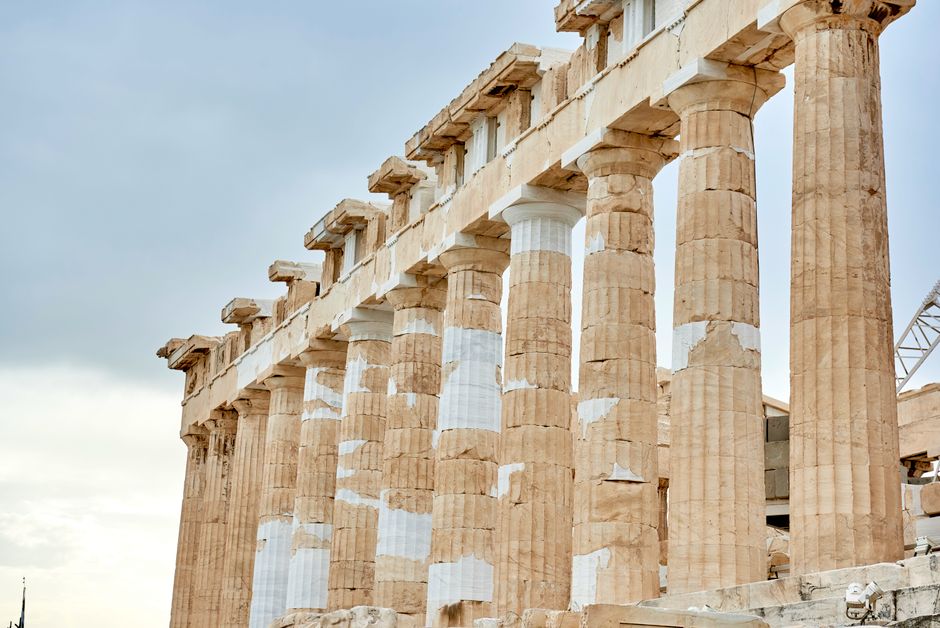
Think of the iconic Parthenon in Athens, a masterpiece of ancient Greek design. These structures prominently featured columns, carefully crafted in distinct orders: the sturdy Doric, the neat Ionic, and the ornate Corinthian. Materials like marble, brick, and concrete were employed, creating buildings that were not only visually impressive but also incredibly durable. Classical design motifs, such as intricate interior molding, medium-pitched roofs, decorative door surrounds, and broken pediments, became hallmarks of sophistication.
The enduring influence of Classical architecture is profound. It laid the aesthetic and structural foundations for countless subsequent movements, including the Neoclassical revival that flourished in the 18th and 19th centuries. For us, understanding Classical architecture is like learning the alphabet of design—it provides the basic language through which many other styles communicate.
Medieval Architecture (c. 500 – 1500 AD)
Following the classical era, Europe entered a period often referred to as the Middle Ages, marked by the powerful influence of the Church. This era, roughly from 500 to 1500 AD, saw the rise of two significant architectural styles: Romanesque and Gothic. Both were deeply intertwined with spiritual expression, with the dominance of the Church over everyday life manifesting in grand, spiritual designs that emphasized piety and sobriety.
Romanesque architecture, prevalent from about 1000 to 1300 AD (and sometimes referred to as Norman architecture in England), is distinguished by its semicircular arches, thick, heavy walls, small windows, and often large, imposing towers. These buildings conveyed a sense of strength and permanence.
Then came the dramatic shift to the Gothic style, emerging in the mid-12th century and lasting until the 16th century. Gothic architecture, perhaps the most recognizable type of architecture from this period, sought to lift the spirit heavenward. It is characterized by its signature pointed arches, which allowed for greater height and wider spans, along with ribbed vaults and the ingenious system of flying buttresses. These structural innovations enabled architects to create soaring, slender walls filled with expansive stained-glass windows, bathing the interiors in ethereal light. The result was a collection of grand cathedrals, like the Chartres Cathedral in France, designed to inspire awe and devotion, with pointed roofs extending to immense heights. We can dig More about Romanesque and Gothic styles to appreciate their distinct evolutions.
Renaissance Architecture (c. 1400 – 1600 AD)
The Renaissance, meaning “rebirth,” emerged in early 15th-century Florence, Italy, and marked a profound shift in European thought and artistic expression. This period, roughly from 1400 to 1600 AD, saw a conscious revival of ancient Greek and Roman forms, rejecting what many Renaissance architects viewed as the “corrupting” influence of “northern” Gothic traditions. It was a time of humanism, where “Man was placed at the center of his world instead of God,” leading to a renewed focus on earthly beauty and rational design.
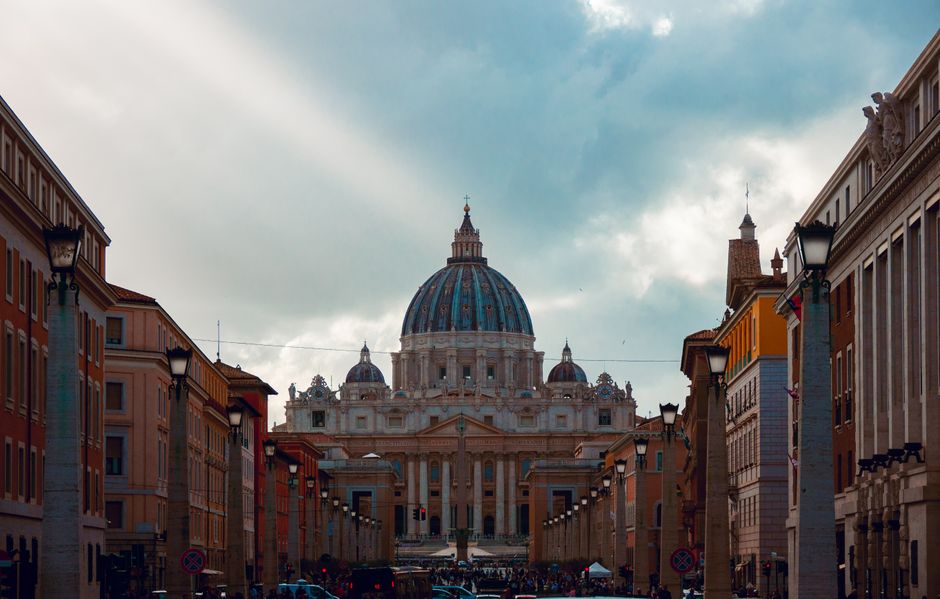
Renaissance architecture acceptd precise symmetry and proportion, echoing the classical ideals of harmony and order. Buildings from this era are characterized by the widespread use of ashlar masonry, and familiar classical elements such as domes, columns, pilasters, lintels, arches, and pediments. Early Renaissance buildings, like those in Florence, were also innovative in their focus on bringing in air and light, a testament to the era’s evolving understanding of comfort and well-being.
The dome became a particularly powerful symbol of the era, famously exemplified by Brunelleschi’s dome on the Florence Cathedral and later, the magnificent dome of St. Peter’s Basilica in Rome. These structures showcased not only architectural prowess but also a profound understanding of engineering and artistic vision. To understand this pivotal period, it’s helpful to explore Renaissance history and its cultural context. This type of architecture ushered in an era of intellectual and artistic flourishing that continues to captivate us.
The Modern Era: Art Deco, Moderne, and the International Style
The early 20th century was a whirlwind of social, technological, and cultural change. This transformative period ushered in an era of radical new architectural expressions, with styles that enthusiastically celebrated machinery, speed, and a forward-looking vision for a new world. We see a clear departure from historical revivalism towards bold, innovative designs.
Art Deco (1925-1945): The Jazz Age’s Architectural Expression
Emerging from the vibrant cultural landscape of the 1920s, Art Deco burst onto the scene as the definitive type of architecture for the Jazz Age. Officially debuting at the Exposition Internationale des Arts Decoratifs et Industriels Modernes in Paris in 1925, this style quickly became popular in the U.S. and Europe, flourishing between 1925 and 1945. It was an aesthetic deeply influenced by ancient Egypt, the glamour of Hollywood, and French decorative arts, all filtered through the lens of modernism and the Roaring Twenties.

The defining characteristics of Art Deco architecture are unmistakable. We see hard-edged geometric compositions, a strong vertical emphasis, and distinctive stepped facades. Patterns like zigzags, chevrons, and sunbursts are common, creating a sense of dynamic movement and sophisticated flair. This style often used shiny, man-made materials for a futuristic look, incorporating decorative glass, terracotta, and steel.
Art Deco’s influence profoundly shaped urban development and city skylines, particularly in the 1920s and 1930s. In New York City, for instance, it manifested in iconic skyscrapers like The Empire State Building and the Chrysler Building. These structures, with their clean lines, geometric patterns, and crown-like tops, epitomized the era’s ambition and technological marvel. However, Art Deco wasn’t monolithic. Regional variations abounded; consider Miami’s South Beach, where the style took on a more playful, tropical vibe. Here, buildings used terra cotta and stucco, featuring colorful, ornate patterns, curved corners, and bold hues that perfectly suited the sunny environment. The contrast between Manhattan’s steely verticality and Miami’s vibrant curvilinear forms highlights the style’s adaptability.
The Evolution to Art Moderne and Bauhaus
Art Deco, with its focus on luxury and ornamentation, soon began to evolve. As the 1930s approached, a more streamlined and functional aesthetic emerged, known as Art Moderne (or Streamline Moderne). This type of architecture retained some of Art Deco’s futuristic spirit but stripped away much of its elaborate decoration. Art Moderne buildings are characterized by smooth walls, rounded corners, curved glass windows, and horizontal bands of windows, often culminating in flat roofs. It was about speed and efficiency, reflecting the era’s fascination with aerodynamics and industrial design. While clearly related, Art Moderne presented a softer, more fluid contrast to Art Deco’s angularity.
Concurrently, a different movement was gaining traction in Germany: the Bauhaus school. Founded in 1919 by German American architect Walter Gropius, Bauhaus architecture was born from a utopian aim to rebuild society after World War I, promoting a rational, functional design ethos captured by the famous motto “form follows function.” This meant prioritizing a building’s utility for the user over its aesthetic appearance, often resulting in a deliberate rejection of ornament. Bauhaus buildings are known for their simple geometric forms, flat roofs, and the innovative use of modern materials like steel, glass, and concrete. The school, though officially shuttered in 1933, profoundly influenced what became known as the International Style, which spread globally in the 1920s. The International Style acceptd rectilinear forms, minimal ornamentation, and expansive windows, appearing light and simple.
It’s important to clarify that Art Deco, Art Nouveau, Bauhaus, and Cubism, while all part of the broader modernist trend, are distinct. While some sources might broadly refer to Art Deco as “Art Nouveau, Bauhaus, or Cubism,” this is a simplification. Art Nouveau, a late 19th and early 20th-century aesthetic movement, is characterized by organic shapes and sinuous, naturalistic lines, a stark contrast to Art Deco’s geometric rigidity. Cubism, an art movement, influenced Art Deco’s geometric patterns but was not an architectural style itself. Bauhaus and the International Style, on the other hand, represented a more radical break from historical ornamentation, focusing on pure function and industrial materials, setting them apart from Art Deco’s decorative splendor. Understanding these nuances helps us appreciate the rich mix of early 20th-century design.
A Look at a Major type of architecture: Post-War and Contemporary Styles
After the tumultuous early 20th century, the post-war era brought new optimism and challenges, leading to yet another evolution in architectural thought. These styles, from the mid-century optimism to today’s urgent focus on sustainability, define the modern built environment and offer compelling hints at the future of design.
Mid-Century Modern and Brutalism (1950s-1970s)
The period from the 1950s to the 1970s saw the rise of several influential type of architecture styles. Mid-Century Modernism, popular from 1950-1979, was a clear manifestation of the mid-20th century zeitgeist, enthusiastically embracing innovation and functionality while consciously rejecting traditional form and ornament. This style is celebrated for its clean lines, organic forms, and a strong connection to nature. Think expansive windows, open floor plans, and a seamless integration of indoor and outdoor spaces, creating a sense of lightness and openness.
In stark contrast, but born from the same era, was Brutalism. Popular from the 1950s to the 1970s, Brutalism is an offshoot of modernism (though some describe it as a post-modernist movement) that marked a rejection of more eclectic trends. Its name, derived from the French “béton brut” (raw concrete), perfectly describes its aesthetic. Brutalist architecture is characterized by its simple, block-like, hulking concrete structures with graphic lines, a heavy appearance, and a deliberate lack of ornamentation. These buildings often convey a sense of weighty massiveness and utilitarianism, making a bold, sometimes imposing, statement.
Both styles, in their own ways, reflected the post-war desire for new beginnings and functional design, albeit with vastly different aesthetic outcomes.
Postmodernism and Deconstructivism (1960s-1990s)
By the 1960s and ’70s, a new generation of architects began to question the rigid doctrines of Modernism. This led to the emergence of Postmodern architecture, a 20th-century movement characterized by a conscious reaction against the perceived austerity and uniformity of its predecessor. Postmodernism acceptd a “mishmash” of classic and modern styles, often exuding personality, wit, and an ironic take on past architectural elements. We saw a return to color, ornament, and a playful use of historical references, rejecting the Modernist mantra that “less is more.” Buildings from this era often tell a story, sometimes with a wink and a nod to architectural history.
Following Postmodernism, Deconstructivism emerged, with earlier drawings presented during World War I, though its official reference wasn’t coined until the 1980s by French philosopher Jacques Derrida. This type of architecture pushes the boundaries of form and structure, playing with fragmentation, non-linear design, and a deliberate sense of dislocation. Deconstructivist buildings appear to be broken apart and reassembled, challenging conventional notions of harmony and stability. For a deeper dive into this philosophical approach to design, one might explore Jacques Derrida’s influence.
Contemporary and Sustainable: The Future of This type of architecture
Today, we find ourselves in the era of Contemporary architecture, which broadly encompasses present-day building styles that followed the modern and postmodern periods. Unlike previous eras with singular dominant styles, contemporary design is wonderfully diverse. It accepts innovative materials and methods, often featuring rounded forms, curved lines, unconventional volumes, and asymmetry. What truly defines this current type of architecture is its inherent focus on environmental impact and sustainability.
The concept of sustainable architecture gained significant value in the late 1980s, driven by growing environmental awareness. This has evolved into a core tenet of contemporary design, where we prioritize reducing negative environmental impact through structural efficiency, responsible energy resources, efficient wastewater treatment, and integrating greenery. At Hutter Architects in Chicago, Illinois, our expertise lies precisely in this field: creating energy-efficient, future-proofed homes that prioritize environmental sustainability. We believe in designing for a zero-carbon, healthy, just, resilient, and equitable built environment, aligning with frameworks like the AIA Framework for Design Excellence.
This focus translates into designing Sustainable and Green Architecture, implementing High Performance House Design, and ultimately striving for net-zero homes. These are not just buzzwords; they represent a fundamental shift in how we approach design and construction. Our goal is to create Energy Efficient Homes that are comfortable, cost-effective, and contribute positively to the planet. The future of architecture, we believe, is inherently green.
Frequently Asked Questions about Architectural Styles
We often encounter questions about identifying and understanding the myriad type of architecture styles out there. Here are some quick answers to a few common inquiries.
What are the key features that distinguish Art Deco from other architectural styles?
Art Deco stands out with its distinct visual language. When we look at an Art Deco building, we immediately notice several key features:
- Strong Geometric Patterns: Think zigzags, chevrons, sunbursts, and other stylized geometric motifs. These are often hard-edged and repetitive, creating a sense of order and dynamism.
- Luxurious and Man-Made Materials: The style acceptd modernity, using materials like polished steel, chrome, decorative glass, and terra cotta, often with contrasting colors and textures. These materials were chosen for their sleekness and ability to convey a sense of glamour.
- Stylized, Non-Naturalistic Ornamentation: While it can be ornate, the decoration in Art Deco is rarely organic or flowing. Instead, it’s highly stylized, abstract, and often draws from ancient cultures (like Egyptian motifs) or industrial forms.
- Strong Vertical or Horizontal Lines: Many Art Deco buildings emphasize verticality, particularly skyscrapers, conveying a sense of aspiration and height. However, later Streamline Moderne variations introduced strong horizontal lines to suggest speed and aerodynamics.
This contrasts sharply with Art Nouveau’s organic curves and flowing, naturalistic forms (think vines and flowers), and Modernism’s stark functionalism, which actively rejected ornament in favor of clean, unadorned surfaces. Art Deco strikes a unique balance between decorative richness and a forward-looking, machine-age aesthetic.
How do I identify the architectural style of my house?
Identifying the architectural style of your home can be a fun detective game! We recommend starting by looking for some key features:
- Roof Shape: Is it flat, steeply pitched, hipped, gabled, or does it have multiple slopes?
- Window Types: Are they tall and narrow, wide and horizontal, multi-paned, single-paned, or adorned with decorative elements?
- Building Materials: Is your home primarily brick, wood siding, stucco, stone, or a combination?
- Symmetry vs. Asymmetry: Does the front of the house have a balanced, mirrored appearance (symmetrical), or is it more irregular and varied (asymmetrical)?
- Decorative Elements: Look for specific details like columns, elaborate trim, unique porch designs, specialized eaves, or patterned brickwork.
Once you’ve noted these characteristics, you can compare them to architectural field guides or online resources. Sometimes, a house might be a blend of styles, or a “revival” of an older one. If you’re in Chicago and need a professional eye, consulting a residential architect like us can provide a definitive answer and help you understand your home’s unique history and potential.
What is the most popular type of architecture for homes today?
Naming a single “most popular” type of architecture for homes today is actually quite challenging! As architects, we observe that contemporary design is incredibly diverse, and what’s popular often depends on regional variations and individual preferences. It’s also difficult to definitively name a “newest” style, as movements often need distance and time to fully take shape.
However, we can certainly identify some strong trends and enduring favorites:
- Modern Farmhouse: This style continues its immense popularity, blending rustic charm with clean lines and contemporary finishes.
- Craftsman Revival: With its emphasis on natural materials, handcrafted details, and sturdy construction, the Craftsman style, originating from the Arts and Crafts movement, remains a beloved choice.
- Mid-Century Modern: The timeless appeal of its clean lines, open floor plans, and connection to nature, dating back to the 1950s-1970s, still influences many contemporary home designs.
- Contemporary Designs: Broadly speaking, modern homes that use innovative materials, accept rounded forms, curved lines, and unconventional volumes are highly sought after.
Perhaps the most significant overarching trend, and one we champion at Hutter Architects, is the growing interest in Sustainable House Designs. Homeowners are increasingly prioritizing energy efficiency, eco-friendly materials, and designs that minimize environmental impact. Whether it’s a sleek modern home or a reimagined traditional style, sustainability is becoming a defining feature of today’s most desirable residences. The internet and social media, while some argue they could lead to sameness, also allow many styles to flourish contemporaneously, enabling diverse inspirations for homeowners.
Conclusion
The journey through the various type of architecture styles reveals a fascinating story of human ingenuity, cultural shifts, and technological advancements. From the enduring logic of Classical design to the aspirational heights of Gothic cathedrals, the human desire to build and express has always been profound. The bold statements of Art Deco, the functional purity of Bauhaus, and the playful rebellion of Postmodernism each reflect their unique eras.
As we look to the future, the narrative continues with Contemporary architecture, particularly its unwavering focus on sustainability. This isn’t just a trend; it’s a necessity. Firms like Hutter Architects are leading the way in Chicago, Illinois, proving that great design can be both beautiful and environmentally responsible. By focusing on Sustainable Design, we can create homes that are not only comfortable and efficient but also contribute to a healthier planet, ensuring our built environment serves future generations as well as it serves us today.
Ready to learn more about the professionals who bring these styles to life? Explore our guide on the different types of architects.


